Paint guide
Small Bedroom Accent Wall Ideas: 8 Treatments to Test
Eight ways to treat the bed wall, with furniture pairings, full-size samples and fit checks for the room you actually use.
- By
- EstimatorPad Editorial Team
- Published
- October 26, 2026
- Reading time
- 17 min

Find the idea that fits
Start with the room you already have.
An accent wall looks easy in an empty-room photo. In a real small bedroom, the bed covers the middle of it, nightstands crowd both sides, a window or door cuts into the rest, and the headboard you're keeping has its own color and shape.
On this page
- Choose an idea
- 1. A low-contrast painted bed wall
- 2. A deep-colored wall that frames the bed
- 3. A half-height painted treatment
- 4. A painted headboard-shaped block or arch
- 5. Wallpaper concentrated on the bed wall
- 6. Simple painted trim or panel molding
- 7. A shallow wood-slat or wood-panel treatment
- 8. A soft upholstered bed-wall treatment
- Compare the options
- Measure and test
- Which wall should you actually accent?
- Test the design before committing
- Before-shopping worksheet
- Your first step
- Before buying
- FAQ
1. A low-contrast painted bed wall

One wall sits a step or two deeper than the others, in the same color family and undertone: warm greige against a soft off-white, or a dusty blue against a paler blue-gray. It reads as a slightly richer backdrop rather than a color event. Benjamin Moore suggests a shade a few steps lighter or darker than the surrounding walls, which is about the right distance here.
The problem it solves. A bed that nearly fills its wall, with bedding that is already patterned. The quiet wall defines the backdrop without adding a second strong pattern.
Pairings. Patterned quilts and duvets, a dark wood or black metal headboard (which becomes the strongest element), and curtains in the main wall color so the drapery doesn't add a third tone. Keep the sheen the same on every wall. Sherwin-Williams notes that sheen changes how a color is perceived, and a mismatch can turn a subtle color step into a visible shine step.
Try it first. Brush a sample directly onto the bed wall beside the existing color; Benjamin Moore recommends at least two coats of a liquid sample for an accurate read. Then look at it under the lamps you use at night, since warm bulbs can flatten small differences.
Where it falls short. Contrast this gentle can vanish once the headboard, pillows and nightstands cover most of the wall. If you can barely tell the sample from the old wall in a photo taken with the bed in place, move to a deeper color (idea 2) or confine the color to a shape (idea 4).
2. A deep-colored wall that frames the bed

Think forest green, ink blue or deep brown behind the bed, with the ceiling and other walls lighter. The bed reads as a lit object in front of a dark panel.
What decides the result is what sits in front of it. Light bedding and a pale or woven headboard stand out against a deep wall. A dark wood headboard on a dark wall can merge into one mass and lose its outline. A cool deep color beside warm wood can expose an undertone mismatch, so test with the real wood nearby. White trim, the ceiling and the adjoining walls act as the frame, and yellowed or tinted finishes will show against it.
Don't lean on size rules. Paint brands offer rules of thumb in both directions (cooler colors tend to recede; darker shades feel cozy), and neither holds in every room. Ask whether the color looks right here, at the times you use the room.
Try it first. Paint a large sample board (Benjamin Moore suggests white foam board for moving a sample around) and stand it behind the headboard. Photograph it at midday and at night.
Where it falls short. Limited daylight, bulky dark furniture and a deep wall can feel heavy after dark. Sherwin-Williams notes that flat paint hides wall flaws but scuffs and stains more easily, which matters where a headboard rubs. If the combination worries you, a half-height band (idea 3) or painted block (idea 4) limits how much dark paint you commit to.
3. A half-height painted treatment

The lower part of the wall takes a deeper color, the upper part stays the room's main color, and one horizontal line divides them. The bed is anchored without the whole wall changing. Everything depends on where the line lands:
Against the headboard. Avoid a line that skims within an inch or two of the headboard's top edge; near-misses look like mistakes. Put it clearly above the headboard, or tie it to something visible, such as a windowsill, nightstand top or door casing.
Switches and sockets. Choose a height that passes above or between them, not through a cover plate.
Windows. If a window shares the wall, aligning the line with the sill gives it a reason to exist.
Adjacent walls. End the line at an inside corner or carry it around the room. A line that stops halfway along a wall looks unfinished.
Pairings. The band helps bulky existing furniture: a wardrobe or dresser against it blends in rather than interrupting a pale wall. Full-length curtains cross the line, so check them against both colors. Plain or tone-on-tone bedding keeps the horizontal from competing with pattern.
Try it first. With the bed in position, run painter's tape at two or three candidate heights. Look from the doorway and the foot of the bed, and adjust by a few inches.
Where it falls short. A crisp line exposes uneven ceilings and rough surfaces, and tape can be fussy on textured walls. A horizontal band also draws attention to ceiling height, so in a low room check with tape that it doesn't make the ceiling feel lower to you.
Advertisement
4. A painted headboard-shaped block or arch

A rectangle, rounded-top rectangle or arch is painted behind the bed, sized to read as an oversized headboard. It adds a focal point with no projection, hardware or wall fixings, and it can be painted over later. Benjamin Moore shows a painted arch "headboard" in a small bedroom as one example.
Scale and alignment. Size the shape to the bed, not the wall. It only works if it shows, so leave visible margin above and on both sides of the headboard and pillows. A shape hidden behind a tall upholstered headboard is wasted paint.
If the bed is off-center, align the shape to the bed. The bed then looks deliberately placed, and the unequal strips of plain wall on either side recede; centering the shape on the wall would put the offset on display. For a corner bed, let one edge of the shape run into the corner.
Pairings. With patterned bedding, pull a calm color from the pattern; Benjamin Moore and Sherwin-Williams both suggest picking up a color from a textile or accessory. With a wood headboard, paint the shape lighter or darker than the wood, not close to it. Keep curtains plain.
Try it first. Cut a full-size outline from lining paper, craft paper or taped-together sheets, tape it up, and add the pillows. A shrunken sketch hides the scale problems this idea creates.
Where it falls short. An arch's curve can argue with a boxy headboard, and curved edges are harder to paint crisply than straight ones. If the bed nearly fills the wall, the shape has no margin to show in, and a full-wall treatment will work better.
5. Wallpaper concentrated on the bed wall
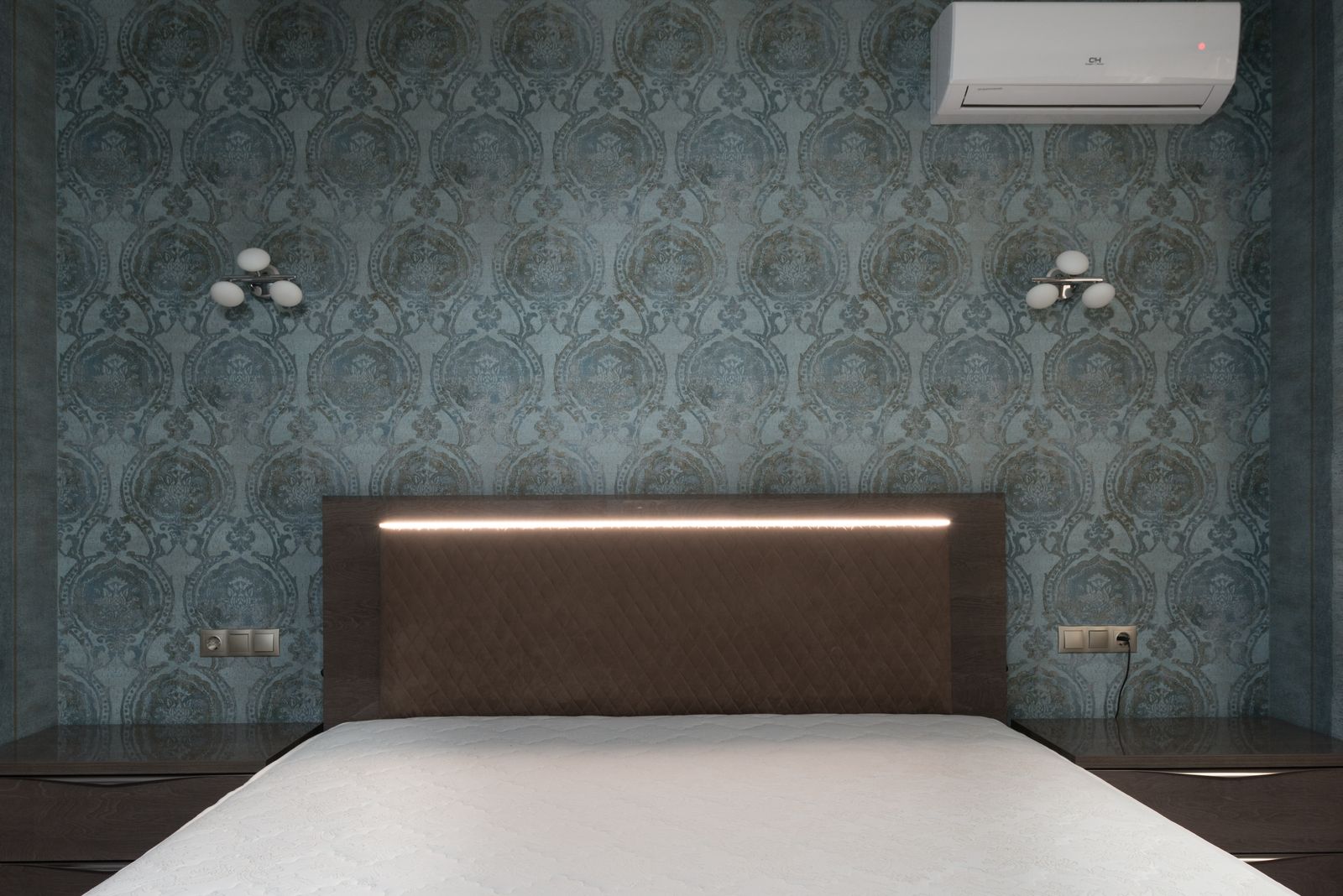
One wall is papered and the rest are painted in a color drawn from the paper's background. Three decisions matter: pattern scale, how much wall will actually be visible, and whether your wall suits the product.
Scale and visibility. A large motif needs open wall to read, and a wide headboard can hide the center of the design. If most of the middle will be covered, favor a small-to-medium or textural pattern that still looks right in pieces. Check the pattern repeat before ordering; the repeat and the amount of exposed wall affect both placement and ordering.
Surface and removal. Requirements are product-specific. For example, Tempaper specifies suitable smooth, primed paint finishes and a paint-cure requirement for its decorative tile paper. Follow the exact wallpaper and paint instructions; other products differ. Makers describe their products as removable, but results depend on the product, the paint underneath and the wall's condition. If you rent, read the removal instructions and your lease, and test a sample somewhere inconspicuous. Don't treat "removable" as a guarantee.
Pairings. Patterned bedding wants a quiet, tonal or textural paper, or a solid duvet to let the wallpaper lead. Dark bulky furniture reads lighter against a light-ground pattern. Keep curtains solid.
Try it first. Order a sample and tape a large piece behind the headboard with the pillows in place. Compare it with the bedding at night and check from the doorway.
Where it falls short. When the bed nearly fills the wall and the headboard is large, only slivers of pattern remain. Paint (ideas 1 to 4) will make better use of the money.
6. Simple painted trim or panel molding
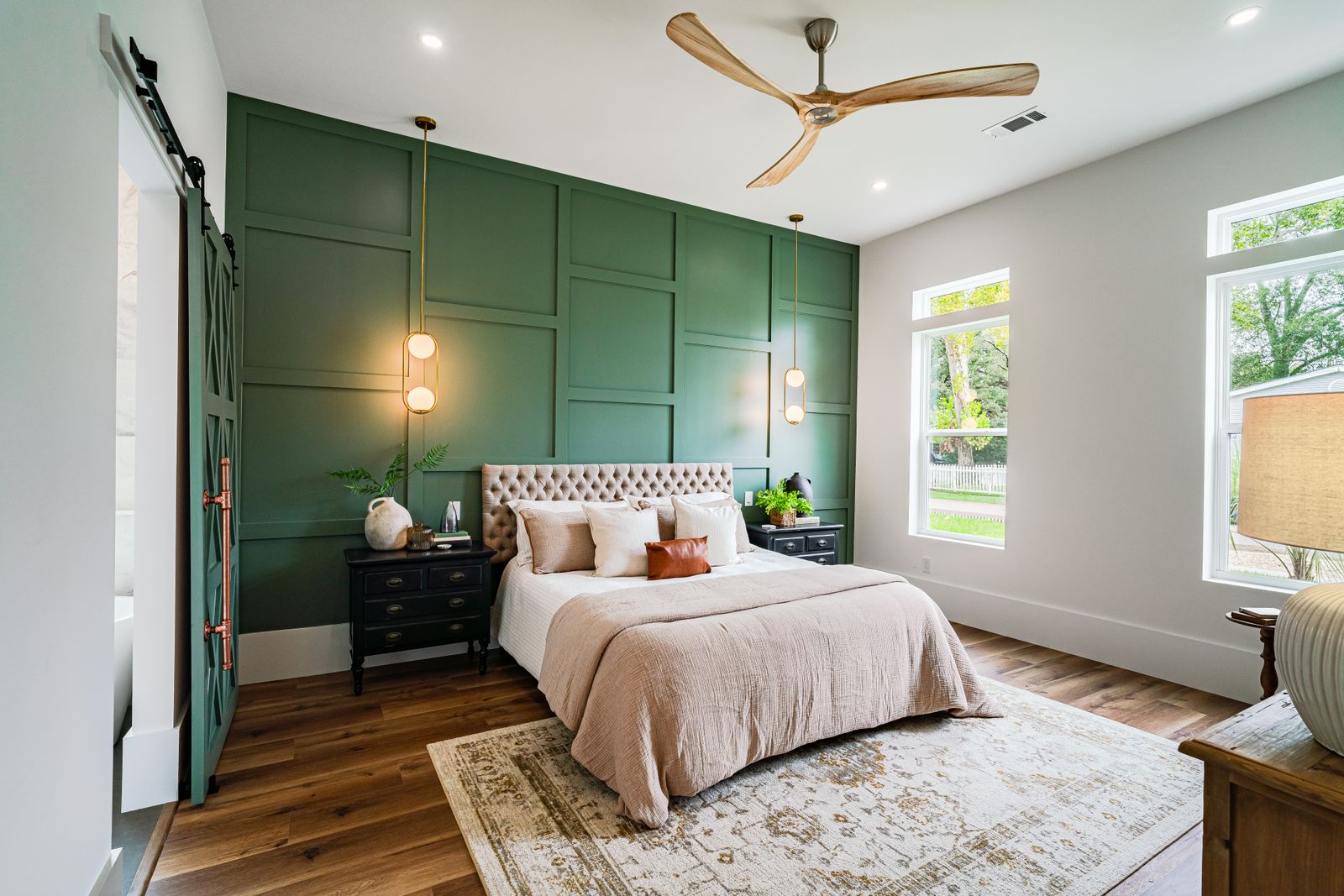
Thin trim forms flat rectangles on the wall, painted the wall color or a shade away, so shadow lines do the work. Keep it restrained: one large frame around the bed, or a few panels, not a full grid.
Spacing. There's no universal measurement. Derive the layout from the bed, and let panel edges relate to something visible: the headboard width plus a margin, the nightstands or the window casing. Set panel height relative to the headboard top. Treat switches and sockets as fixed; if a panel would cover one, change the layout rather than improvising.
Pairings. A tonal frame suits a headboard with its own character, or a plain one that needs structure. Keep curtains in the wall color so nothing competes.
Try it first. In a tight room the trim's thickness is felt at the bed. Tape rectangles in the proposed positions to judge spacing, then tape a strip of cardboard of similar thickness where trim would sit, push the bed back against it, and check the headboard, pillows and wall lamps.
Where it falls short. Trim has to be fixed to the wall, and the right method depends on your wall and the product, so follow its instructions or ask a pro. If you rent, or the bed has to sit flush, choose a paint-only idea.
Advertisement
7. A shallow wood-slat or wood-panel treatment

Narrow slats or panels turn the bed wall into warm texture. The word that matters is shallow: decide the projection deliberately.
Projection. Use the product's stated thickness, push a cardboard mock-up behind the bed, and check headboard and lamp clearance.
Cleaning. Gaps and edges can collect dust, so check the finish manufacturer's cleaning guidance.
Tone. Compare the sample against your floor, bed frame and nightstands in daylight and under your lamps. Near-matches can look like mistakes, so match closely or contrast on purpose.
Pairings. Painted or metal bed frames, linen bedding and plain curtains let the wood lead. With existing dark, bulky furniture, a lighter slat tone keeps the wall from piling on. With a warm wood bed frame, check undertones first.
Try it first. Lay the sample next to your existing wood, then hold it against the wall. Tape lines on the wall to judge spacing before buying anything.
Where it falls short. It uses more depth than paint and is harder to undo, and fixing depends on the product's instructions and your wall. In a small room already heavy with wood furniture, a wood wall may be too much; deep paint (idea 2) or a painted band (idea 3) is lighter-handed.
8. A soft upholstered bed-wall treatment

This idea applies to a manufactured wall-width headboard or wall-panel system, not homemade foam and fabric. The result is a soft, continuous surface behind the bed.
Cleaning. Fabric care comes from the manufacturer's instructions: some covers come off, others need spot cleaning. Think about dust, spills and pets, since fabric can't be wiped like paint.
Depth and access. Check the product's stated depth, which pushes the bed forward just as slats do. Check whether you need to reach a socket, cord or vent behind the bed, and how the panels attach and come off.
Visual weight and pairings. A large soft mass can dominate a small room; a low-contrast, textured fabric close to the wall color takes up less visual space than a bold one. A solid upholstered surface suits patterned bedding, and plain painted walls and curtains keep the focus on the bed.
Try it first. Cut a paper or cardboard template at the product's dimensions and tape it up. Get fabric swatches and view them beside the bedding under your lamps.
Where it falls short. If you're keeping a large headboard, this duplicates it. Check the manufacturer's guidance on wall lamps and heat sources nearby, and if you rent, how it attaches.
Compare the eight directions
| Direction | Best fit | What to test first | Main trade-off |
|---|---|---|---|
| Low-contrast paint | Bed fills the wall; busy bedding | Sample beside existing color under night lamps | May vanish behind headboard and pillows |
| Deep color | Pale bedding and headboard; some daylight | Large board behind the bed, midday and night | Heavy with dark furniture and low light |
| Half-height paint | Bulky furniture; windows or doors on the wall | Tape at 2–3 heights, seen from the doorway | Crisp line shows uneven surfaces and ceiling height |
| Painted block or arch | Off-center bed; focal point without projection | Full-size paper outline with pillows | Needs visible margin; hidden by a big headboard |
| Wallpaper | Small headboard; plain bedding | Sample behind headboard; surface and removal rules | Large headboard hides the pattern |
| Trim or panel molding | Plain headboard needing structure | Taped layout plus cardboard projection strip | Projects into the room; needs fixing |
| Wood slats or panels | Warm texture; compatible wood tones | Sample beside existing wood; thickness mock-up | Depth, dust, tone clashes |
| Upholstered system | Reading in bed; replacing a headboard | Paper template; fabric swatch under lamps | Depth, cleaning, visual weight |
Measurement steps
How to measure
- Position the bed, headboard, pillows and nightstands where they will stay.
- Measure wall width and height and mark doors, windows, sockets and switches.
- Mark the wall that remains visible above and beside the actual headboard.
- Test full-size paper outlines and product thickness where a treatment projects from the wall.
- Compare material and color samples with existing furniture in daylight and under the night lamps.

Advertisement
Which wall should you actually accent?
Sherwin-Williams points to the wall that comes into view opposite the room's entrance as often appropriate for a feature wall. Benjamin Moore lists the wall behind the headboard as one choice and advises picking a wall you want to draw attention to, not one you'd rather blend away. Treat both as options. In a small bedroom the right wall depends on what you see, and from where.
Check two views. Stand in the doorway with the bed in place and photograph the room. Which wall do you notice first? Then sit on the bed and wherever else you spend time. From the bed you face the opposite wall and have the bed wall behind you. If you rarely see the bed wall while using the room, the best treatment may be one that shows from the doorway but doesn't need to carry the room.
Centered bed, uninterrupted wall. The easiest case; any of the eight can work. A big headboard often favors a simple painted backdrop; an upholstered wall system makes more sense when it replaces the headboard. A small headboard gives wallpaper more room to show.
Off-center bed. A high-contrast whole-wall treatment can emphasize unequal margins, depending on its pattern and the rest of the room. Frame the bed with a block (idea 4) or panel frame (idea 6), aligned to the bed. If the offset is only a few inches, a low-contrast wall (idea 1) can let it go unremarked.
Corner bed. End the treatment in the corner, not partway along the side wall. If the side wall is within arm's reach, deep color or slats there will feel enclosing, so test both versions.
Window behind the headboard. Treat the window and its casing as part of the wall. Wallpaper gets chopped, and slats or panels need a clean way to stop around the sill. Full-length curtains can become the real accent. Keep any window you need to open, and any blind or curtain, working. Paint is the least complicated answer; a half-height line aligned to the sill is a good one.
Several doors or a large wardrobe. Emphasis on a busy wall makes it busier. Frame only the bed area (idea 4 or 6), or keep the walls quiet and let the bedding carry color.
No accent wall. Skip it if the bed wall is already crowded, if furniture and textiles carry strong color, if you can't repaint, or if a view or artwork is a better focal point. One color on every wall, with the accent in the bedding, is a legitimate answer.
For an awkward room, decide in this order. If the wall is a clean plane and the bed sits near center, emphasize the whole wall. If the bed is off-center or the wall is interrupted, frame just the bed area. If both the wall and the room are busy, choose the quietest treatment, or none.
Test the design before committing
Decide what stays. List the flooring, bed frame, headboard, nightstands, bedding, curtains and lamp bulbs. Every sample has to look right beside those.
Put the bed in its final position first. Don't test against an empty wall or a bed that will move.
Mark the visible wall. With pillows and nightstands in place, tape the edges of what you can see around the headboard.
Make a full-size outline. For a painted block, arch or panel layout, use lining paper or taped sheets at true size.
Sample beside the existing finishes. For paint, follow the sample product instructions, or use a peel-and-stick paint sample or painted board you can move. Benjamin Moore notes liquid samples show color only, not long-term performance. For wallpaper, order the product's own sample.
Look in your real light. View samples from morning through evening in daylight, then under your night lamps, and from the doorway.
Check function. Switches and sockets stay reachable, curtains and blinds move, and nightstands, drawers and wardrobe doors still open. Check anything projecting against a cardboard mock-up.
Compare product instructions and wall condition. Check paint prep and cleaning claims, wallpaper surface and removal rules, and trim or panel fixing methods against your actual wall, including texture, flaws and existing paint.
Once you know which surface you'll paint (the full wall, a lower band or a block), measure that area and enter it in the paint calculator using the known-area option. It estimates paint volume from the coverage and coats you enter; it doesn't tell you whether a color, product or treatment suits your wall.
Before-shopping worksheet
For a worked example of how coats, openings and prep scope affect paint quantity, see the 12×12 room paint-cost guide. It's an example room, not a quote for your bedroom.
| Record this | Why it matters |
|---|---|
| Wall width and height, measured in more than one spot | Sets paint or wallpaper area and panel layout; walls and ceilings aren't always level |
| Bed and headboard size and position | Shows how much wall stays visible and whether the bed is off-center |
| Visible wall around the headboard, pillows in place | The real canvas for color or pattern |
| Doors, windows, switches and sockets | Fixed items decide where lines, edges and panels can go |
| Projection of proposed trim, slats or panels | A few inches matter in a tight room; check headboard and lamp clearance |
| Existing finish and wall condition | Affects how color reads and whether paint or wallpaper suits the surface |
| Paint or wallpaper product requirements | Coats, prep, cure time, surface limits, repeat and removal come from the maker |
| Items that stay (floor, furniture, bedding, curtains, bulbs) | The finishes every sample must sit beside |
Your first step
Position the bed where it will stay, tape out the wall you can actually see around the headboard, and test two or three treatments, one quiet and one bolder, against the finishes that are staying. Check them from the doorway and under your night lamps. Compare the candidates across the daylight and evening conditions you actually use before choosing.
Project checklist
Before you buy or build
- Visible wall checked with furniture in place
- Samples viewed in daylight and evening
- Sockets, switches and curtains remain usable
- Projection tested at full thickness
- Wall suitability and fixing or removal instructions checked
Planning note
Verify before buying or building.
Photographs are visual references, not EstimatorPad projects or verified installations. Confirm the exact product instructions and suitability for your own room before buying; construction, waterproofing and repair details need the appropriate installer.
FAQ
Common questions
01Can a small bedroom have a dark accent wall?+
Yes, but test it. Benjamin Moore calls rich hues a good fit for small bedrooms and nooks, though no color guarantees a room will look larger or smaller. Limited daylight, bulky dark furniture and a dark headboard all push toward heavier. If any apply, try a half-height band or painted block, which gives depth with less dark paint.
02What if the bed is not centered?+
Align the treatment to the bed, not the wall, using a painted block or frame, or keep the color quiet enough that the offset doesn't draw attention. Also test a low-contrast whole-wall pattern; an off-center bed does not automatically rule it out.
03Does the wall need to match the bedding?+
No. Paint makers suggest picking up a color from a textile as one option, not a requirement. With busy bedding, a calmer wall tone or one small color from the pattern is simpler. If you change bedding often, choose a wall that works with several sets.
04Can wallpaper work behind a large headboard?+
It can, if you accept that part of the pattern will be hidden. Measure the visible area above and beside the headboard first, and choose a design that still looks right in fragments. If a sample behind the headboard shows only slivers, paint may be a better use of the budget.
05Which approaches add the least depth?+
Paint (ideas 1 to 4) adds nothing you can measure, and wallpaper adds only the product's thickness. Trim, slats and upholstered systems add whatever their specifications state, so check the number and test it with a cardboard strip behind the bed.
06When should you skip an accent wall?+
Beyond a crowded wall or a strong existing palette, skip it when the treatment would sit almost entirely behind the headboard. In that case, the sample test will tell you: if you can't see the difference with the bed in place, the money is better spent elsewhere.