Siding guide
How Much Siding Do I Need?
Add wall and gable areas, subtract openings, convert to siding squares or product coverage units, and apply a clear waste allowance.
- By
- EstimatorPad Editorial Team
- Published
- July 19, 2026
- Reading time
- 4 min
Direct answer
Start with the useful estimate.
Measure each wall section, add triangular gables, subtract major openings, add waste, then divide by 100 for siding squares or by the product's exposed coverage per box, panel, or piece.

Measurement steps
How to measure
- Measure each exterior elevation as one or more rectangles.
- Measure simple gables by base width and vertical height, then divide by two.
- Measure doors, windows, and other large openings if they will be deducted.
- Use the exposed coverage supplied for the exact siding product.
- Keep trim, starter strips, corners, and specialty pieces separate from the main siding area.
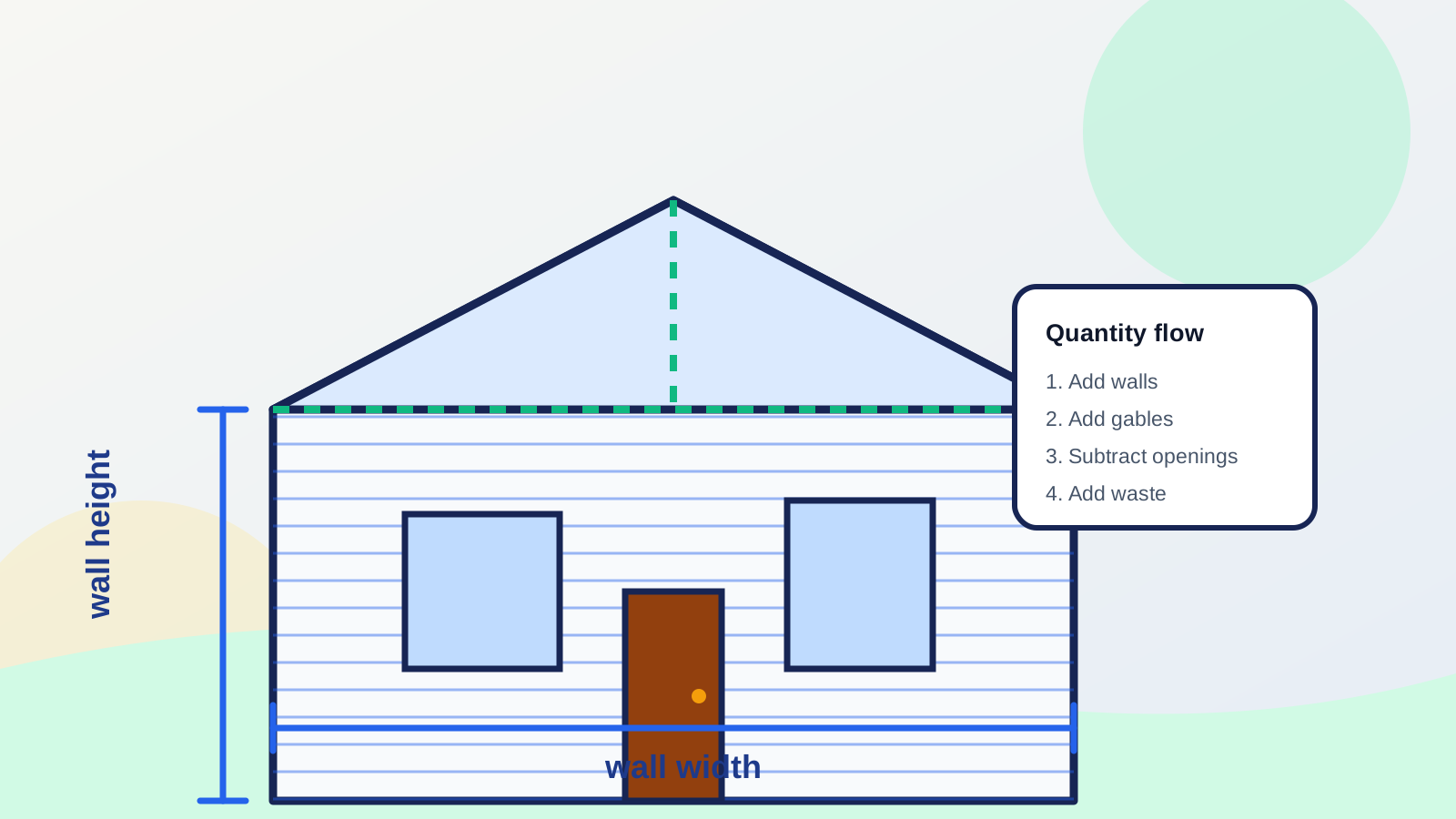
Formula explanation
The formulas to use
Wall area = width x height
Gable area = base x height / 2
Net siding area = wall area + gable area - openings
Purchase area = net area x (1 + waste_percent)
Siding squares = purchase area / 100
Coverage units = purchase area / product_coverage, rounded up
Use with this article
Siding Calculator
Enter the article's measurements and assumptions to check the rounded planning estimate.
Open calculatorProject cluster
Siding planning pages
Open the full hub when you need the matching calculator, sibling guides, and related material estimates in one place.
Worked example
Wall and gable estimate
- 1Wall area = 24 ft x 9 ft = 216 sq ft.
- 2Gable area = 24 ft x 6 ft / 2 = 72 sq ft.
- 3Window opening = 3 ft x 5 ft = 15 sq ft.
- 4Net area = 216 + 72 - 15 = 273 sq ft.
- 5With 10% waste, purchase area = 273 x 1.10 = 300.3 sq ft.
- 6Siding squares = 300.3 / 100 = 3.003 squares.
Plan on about 3.1 squares for area planning, and round coverage units up according to the product package. If one box covers 100 sq ft, the calculator rounds to 4 boxes.
Matches the siding calculator with one 24 ft by 9 ft wall, one 24 ft by 6 ft gable, one 3 ft by 5 ft opening, 10% waste, and 100 sq ft coverage.
Gross area, net area, and purchase area
Siding estimates are easier to audit when each step has a name. Gross area is the total wall and gable area. Net area is gross area minus openings. Purchase area is net area after waste.
Do not skip straight to boxes. If the box count seems high or low, the separate area lines help you find whether the issue is a gable, opening, coverage value, or waste percentage.
Siding squares and product coverage
A siding square is 100 square feet of siding area. That is a useful trade unit, but the exact number of panels or boxes depends on the product's exposed coverage.
Vinyl, fiber cement, engineered wood, and other siding profiles can have different exposures, laps, and package sizes. Use the product documentation or supplier coverage value before placing an order.
Complex elevations need smaller shapes
Dormers, bump-outs, garages, multiple gables, and mixed materials should be broken into rectangles and triangles. A single rough rectangle can overstate or understate the order.
This article gives the quantity method. Use the house-measurement article when you need a more detailed elevation worksheet.
What to verify with the manufacturer or supplier
Before buying, confirm exposed coverage, carton coverage, starter strip needs, corner posts, trim pieces, waste guidance, fasteners, weather barrier details, and installation clearances.
The calculator estimates main siding coverage only. Specialty pieces and installation details can be significant on a real house.
Siding quantity terms
| Term | Meaning | Why it matters |
|---|---|---|
| Gross area | Walls plus gables before deductions | Checks the exterior shape math |
| Net area | Gross area minus openings | Shows the actual covered surface |
| Purchase area | Net area plus waste | Used for ordering |
| Siding square | 100 sq ft | Common supplier planning unit |
Ordering margin
Waste and ordering margin
- Waste covers cuts, course matching, overlaps, damaged pieces, and small measuring errors.
- Complex elevations with many corners, gables, or openings usually need more allowance than plain walls.
- Do not rely on a generic waste percentage for product-specific trim or accessories.
Avoid these
Common mistakes
- Forgetting to divide triangular gables by two.
- Confusing siding squares with square feet.
- Using package coverage without checking exposed coverage.
- Subtracting openings so aggressively that there is no material left for cuts.
- Assuming siding area includes trim, starter, corners, soffit, or accessories.
Project checklist
Before you use the result
- Measure each elevation separately.
- Add gables as triangles.
- Record opening deductions and waste separately.
- Use the exact product coverage value.
- Verify trim, corners, starter strips, and accessories outside the main area estimate.
- Keep gross area, net area, and purchase area visible so a supplier can review the assumptions.
- Do not combine different siding profiles unless they use the same exposed coverage and waste assumption.
- Use the paired measurement worksheet if the house has dormers, bump-outs, or several irregular elevations.
- Confirm whether product coverage is listed per piece, carton, package, or square before rounding.
- Review the final order with the supplier when coverage, exposure, or accessory requirements are unclear, especially on homes with several gables or mixed materials.
Estimate disclaimer
Verify before buying or building.
This guide estimates main siding area only. Confirm product exposure, package coverage, trim, starter strips, corners, fasteners, weather barrier details, and local requirements before purchasing.
FAQ
Common questions
01What is a square of siding?+
One siding square is 100 square feet of siding area. It is a planning unit, not always the same as one package.
02Should I subtract windows and doors?+
Subtract large openings if they materially affect area, but keep enough waste for cuts and detailing around those openings.
03Does this include trim and corners?+
No. The main estimate covers siding area and product coverage units. Trim, starter strips, corner pieces, and accessories should be verified separately.