Outdoor Living guide
Small Front Porch Ideas on a Budget: 8 Practical Changes
Reuse what works, keep the entrance clear and make one useful change before buying a porch full of decorations.
- By
- EstimatorPad Editorial Team
- Published
- October 26, 2026
- Reading time
- 16 min

Find the idea that fits
Start with the room you already have.
A small porch needs room to open the door, carry groceries and set down a delivery. Start by clearing and cleaning what you have, then test one useful change at full size. A door refresh, one usable seat or a correctly sized mat can do more than a coordinated set that crowds the entrance.
On this page
- Choose an idea
- 1. Let the front door carry the color
- 2. One chair you can really use, plus somewhere to set things
- 3. A compact bench where a chair arrangement does not work
- 4. One container arrangement, sized to the space
- 5. A correctly sized doormat zone
- 6. Refresh outdoor furniture you already own
- 7. Use a restrained wall or door detail instead of more floor objects
- 8. Refresh a sound porch surface when decoration is not the main problem
- Compare the options
- Measure and test
- Choose for the porch you actually have
- Spend in the right order
- Measure and test before buying
- Before-shopping worksheet
- Start here
- Before buying
- FAQ
1. Let the front door carry the color
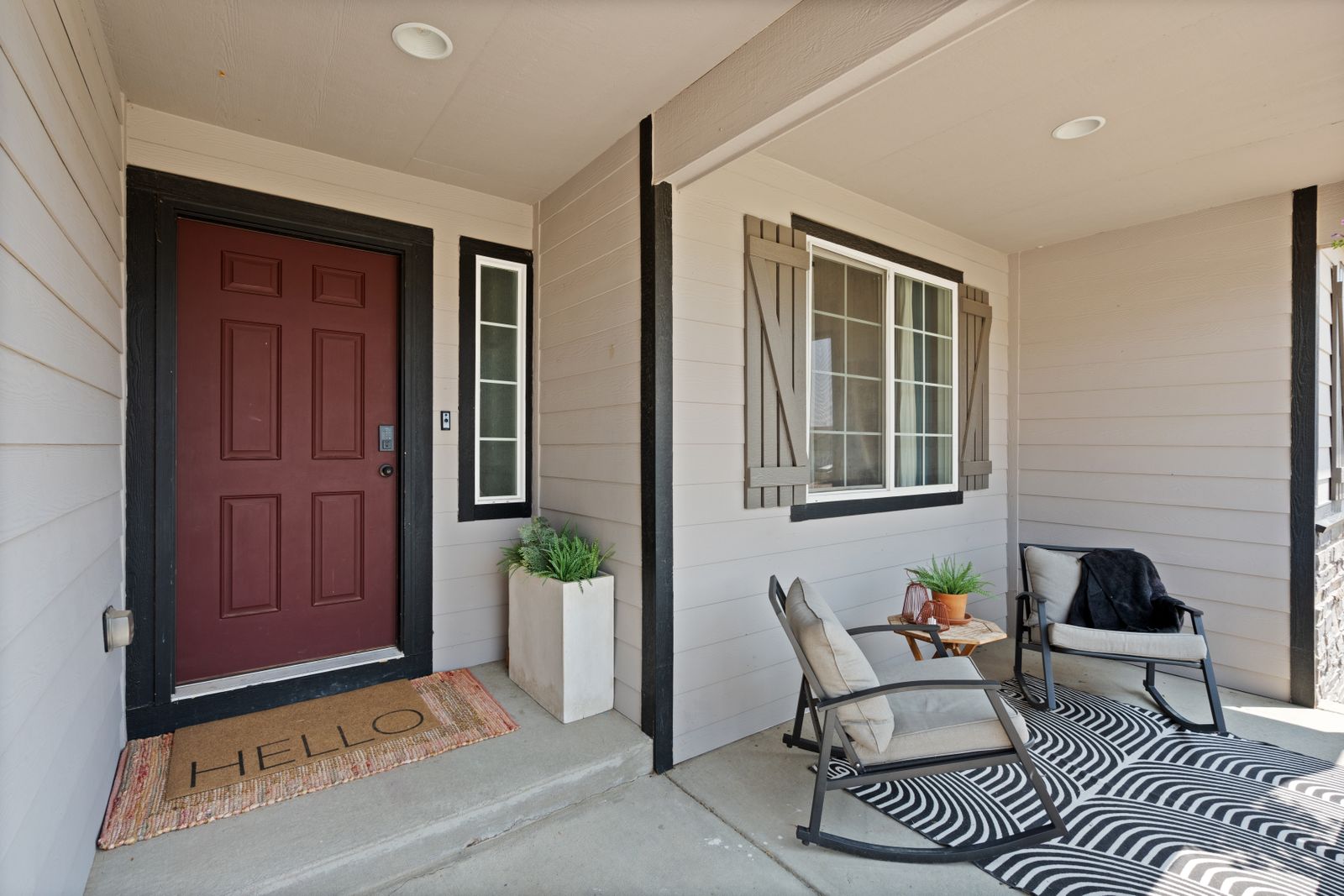
The look: One deliberate door color that picks up something already on the house, such as a brick undertone, the trim, or the finish of the hardware, while the porch itself stays quiet. It suits a porch with no room for furniture, a door that looks tired, and siding or brick you are not changing.
Reuse or inspect first: Identify the door material and check its condition. Sherwin-Williams' front-door painting guide describes degreasing, rinsing, drying, light sanding and priming where required for its own door paint, and addresses fiberglass doors specifically. Other door materials and other paints can differ, so the label of the paint you choose governs. If your home was built before 1978, read the EPA's lead-safe guidance before sanding or scraping anything.
First purchase: Color samples, before any full can. Then exterior-rated paint that the label approves for your door material, plus primer only if the surface or label calls for it.
Full-size test: Tape large samples beside the brick, siding and trim, and look in the morning and late afternoon. Check the color against the storm-door frame too.
Trade-off: You need a dry stretch the label allows, and you need a plan for locking the house while the door is in progress. Tinted paint is often hard to return, so ask the store first.
2. One chair you can really use, plus somewhere to set things
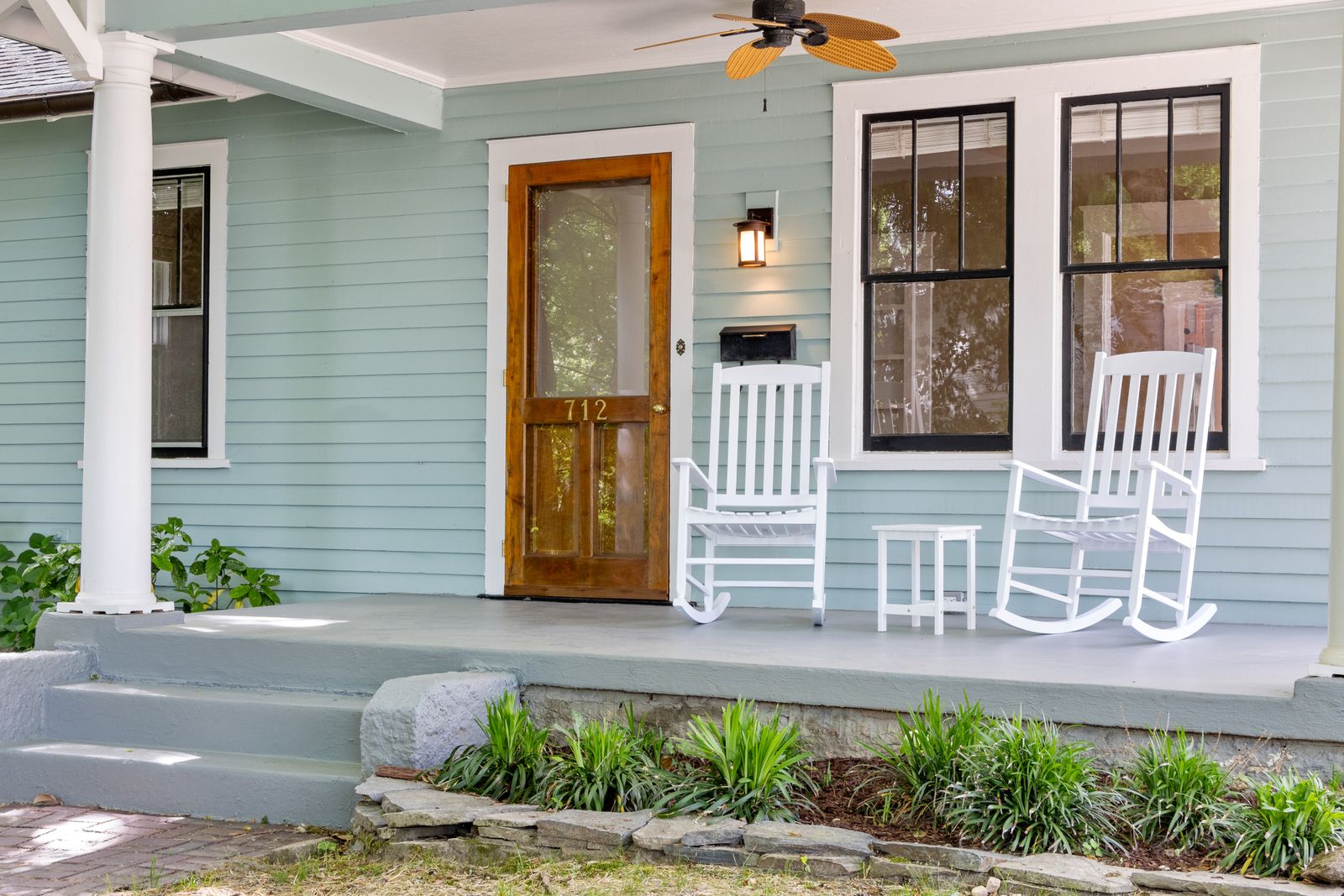
The look: A single comfortable chair at one end of the porch, angled toward the street or yard, with a small stool or ledge beside it for a cup or a package. It suits a porch that has room for one seat beside the door, not across the route to it.
Reuse or inspect first. Start with any sturdy chair you own that is made for outdoor use. Check the joints, the finish, and whether it is comfortable without a cushion. One good chair beats a squeezed-in pair, because a seated person needs room for knees and feet, and a chair needs space behind it to be pulled out. Empty chairs in photos hide that.
First purchase. Often none. If you want a landing spot, add a small stool or side table you can move, and buy it only after measuring.
Full-size test. Sit in the chair with the main door and storm door fully open, holding a grocery bag. Stand, turn, and walk to the door. Have another household member do the same.
Trade-off. One light chair can drift in wind, and a cushion that must come inside whenever it rains is a chore you either accept or skip. Follow the care label of your own cushion.
3. A compact bench where a chair arrangement does not work
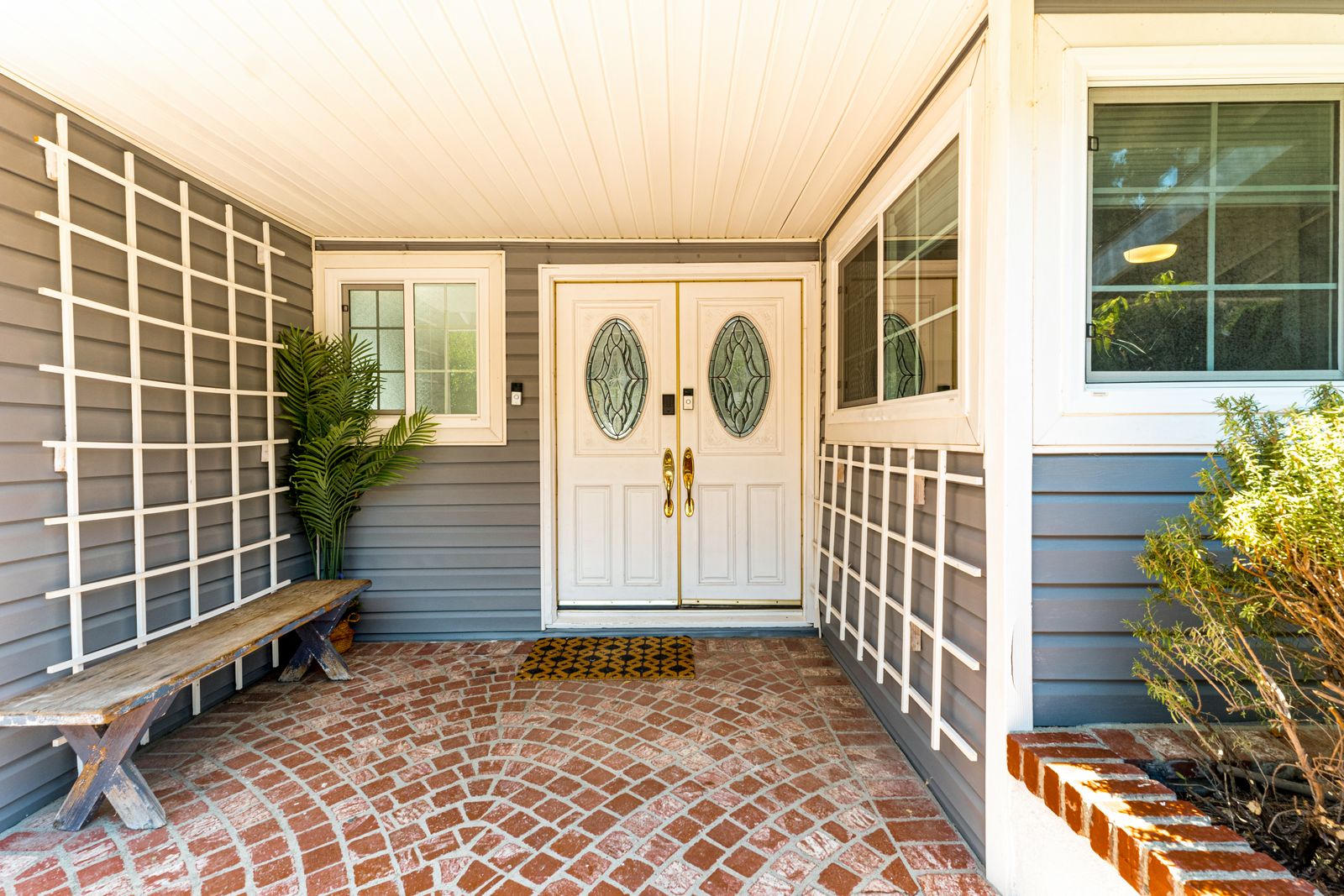
The look: A shallow bench along the wall, giving you a spot to set bags, pull on shoes or wait for a ride. It suits a narrow porch where the sweep of a pulled-out chair is the problem, since a bench has a fixed, predictable footprint.
Reuse or inspect first: Decide what the bench is for before you look at benches. Some are seat-only; a storage bench may trap moisture or not be intended to be sat on. Check what the maker says about use and weight. If you already own a bench, check that its material suits the exposure.
First purchase: Only if nothing you own works, and only after you know the depth you can spare.
Full-size test: Cut cardboard to the bench's full width and depth and lay it down. Use a sturdy existing seat to check the proposed seating position, include room for knees and feet, then test both doors and carry a bag past it. Cardboard marks a footprint; it is not a seat.
Trade-off: It is a permanent obstacle at the spot where you walk. Seat height and the lack of arms can make standing difficult for some people, and a wet seat is not a seat.
Advertisement
4. One container arrangement, sized to the space

The look: One large planter, or a tight grouping that reads as a single unit, tucked in a corner or against the wall, clear of the door arc and the walking line. It suits a bare corner with enough light for living plants.
Reuse or inspect first. Pots you already own. Check for drainage holes, cracks, and how heavy the pot will be once filled with soil and watered. The University of Minnesota Extension's container care guidance says containers need more attention than garden beds, that most container plants prefer moist rather than soggy soil, and that water-catching trays should be emptied regularly. It also notes that depending on container size and material, watering at least daily is typical and hot, dry weather may call for more.
First purchase. Potting mix and plants chosen for your actual light and climate, and a saucer sized to protect the floor. Which plants succeed depends on your local climate, the hours of direct sun the spot receives, and wind. Ask your state's cooperative extension office or a local nursery rather than copying a list from a different region.
Full-size test. Set the container (or a box the same size) in place and check the door arc and walking route. After the first watering, watch where the water goes: across wood boards, toward the steps, into a corner. Never put pots on steps or in the route.
Trade-off. Watering is the real cost. Choose plants and containers whose actual watering needs fit the care you can provide; inspect the soil rather than applying one schedule to every plant.
5. A correctly sized doormat zone

The look: One mat, sized to the door, lying flat, positioned so both doors clear it. It suits entrances where a mat can lie safely without obstructing access, and it matters most where an outward-opening storm or screen door sweeps across the floor.
Reuse or inspect first: Look at the mat you own. Are the corners curling? Is the backing worn? Does it stay wet? Then measure the gap under the main door and under the storm door, both closed.
First purchase: A mat only if the current one fails the test below, and one chosen by what clears the doors, not by a "standard" size.
Full-size test: Place the mat and open and close both doors fully, several times. Step on the edges, carry a bag across, and check whether it shifts. After rain, lift a corner to see whether moisture is trapped underneath.
Trade-off: A mat collects dirt and holds water. Backing that grips when dry may behave differently when wet, so do not assume any mat will stay put. Lifted edges are a trip risk, and thicker mats are the ones that catch on a door.
6. Refresh outdoor furniture you already own
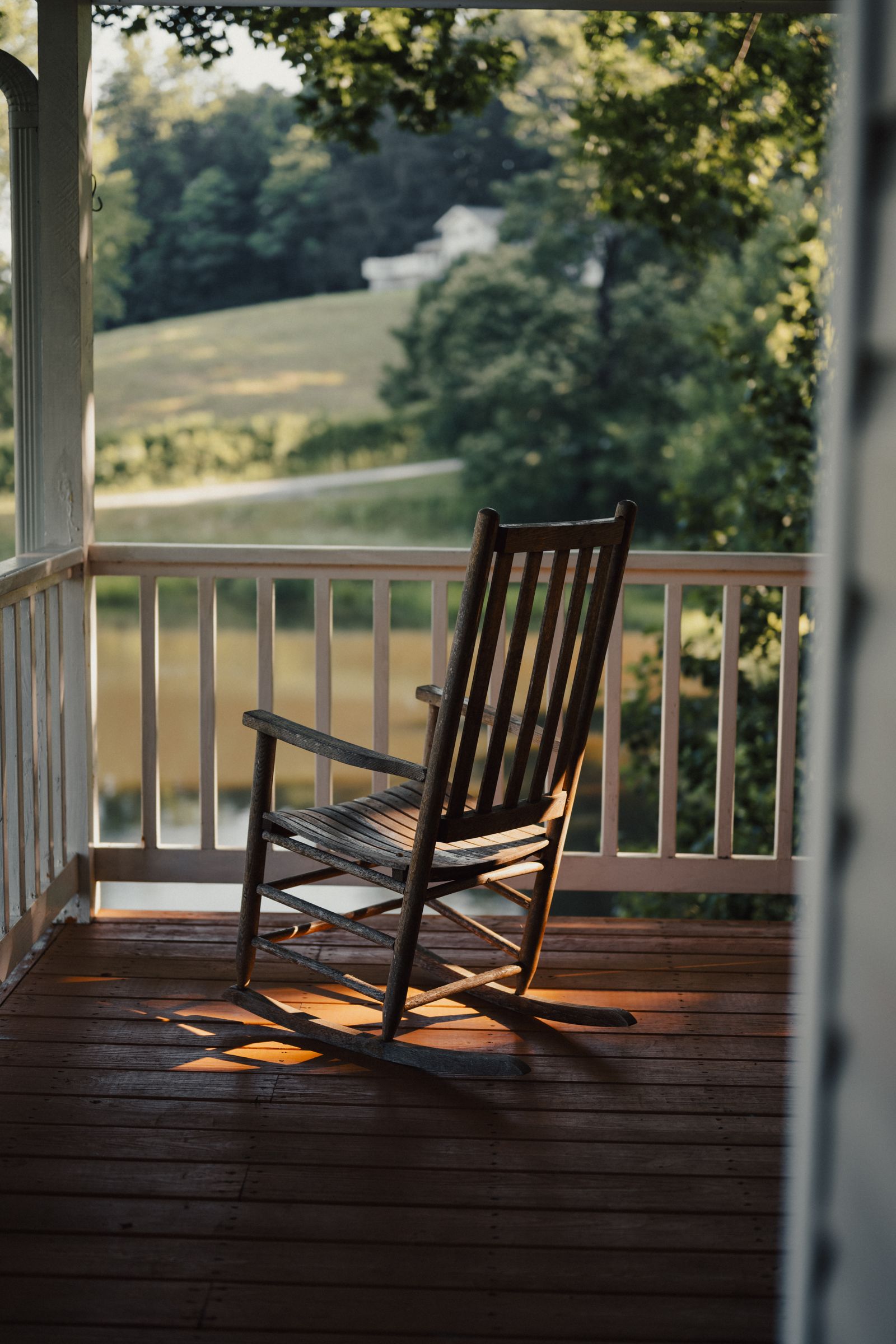
The look: The chair you have, cleaned, tightened and with fresh cushion covers, looking cared for instead of replaced. It suits a porch where the furniture is basically good but looks grimy or faded.
Reuse or inspect first. Identify the material. "Wicker" can be natural or synthetic; wood, metal, plastic and recycled-plastic lumber all have their own care rules. Trex's product care page covers Trex's own furniture, with specific cleaning and cushion-care steps and a warning against pressure washing its performance fabric. That guidance applies to those products and should not be transferred to your furniture. Find your maker's care page; if you cannot, start with the gentlest method (soft brush, mild soap, water, thorough drying) on a hidden spot.
Then inspect for loose joints, splinters, rust, flaking finish, brittle plastic and frayed webbing. A new finish does not repair a failing joint. Indoor furniture does not become outdoor furniture after a coat of paint, because the adhesives, foam, fabric and boards inside were not chosen for weather.
First purchase. Cleaning supplies the maker allows, and perhaps a replacement cushion or cover. Add a finish only if its label names your material and the prep it needs. If the furniture has an unknown older painted finish, ask about possible lead before disturbing it. The age of the house does not establish the age of the furniture or its coating.
Full-size test. After cleaning, sit, rock and wobble the chair. Then place it at full footprint and run the door test from idea 2.
Trade-off. Cleaning and drying take attention, and cushions need somewhere dry to wait out the weather.
Advertisement
7. Use a restrained wall or door detail instead of more floor objects
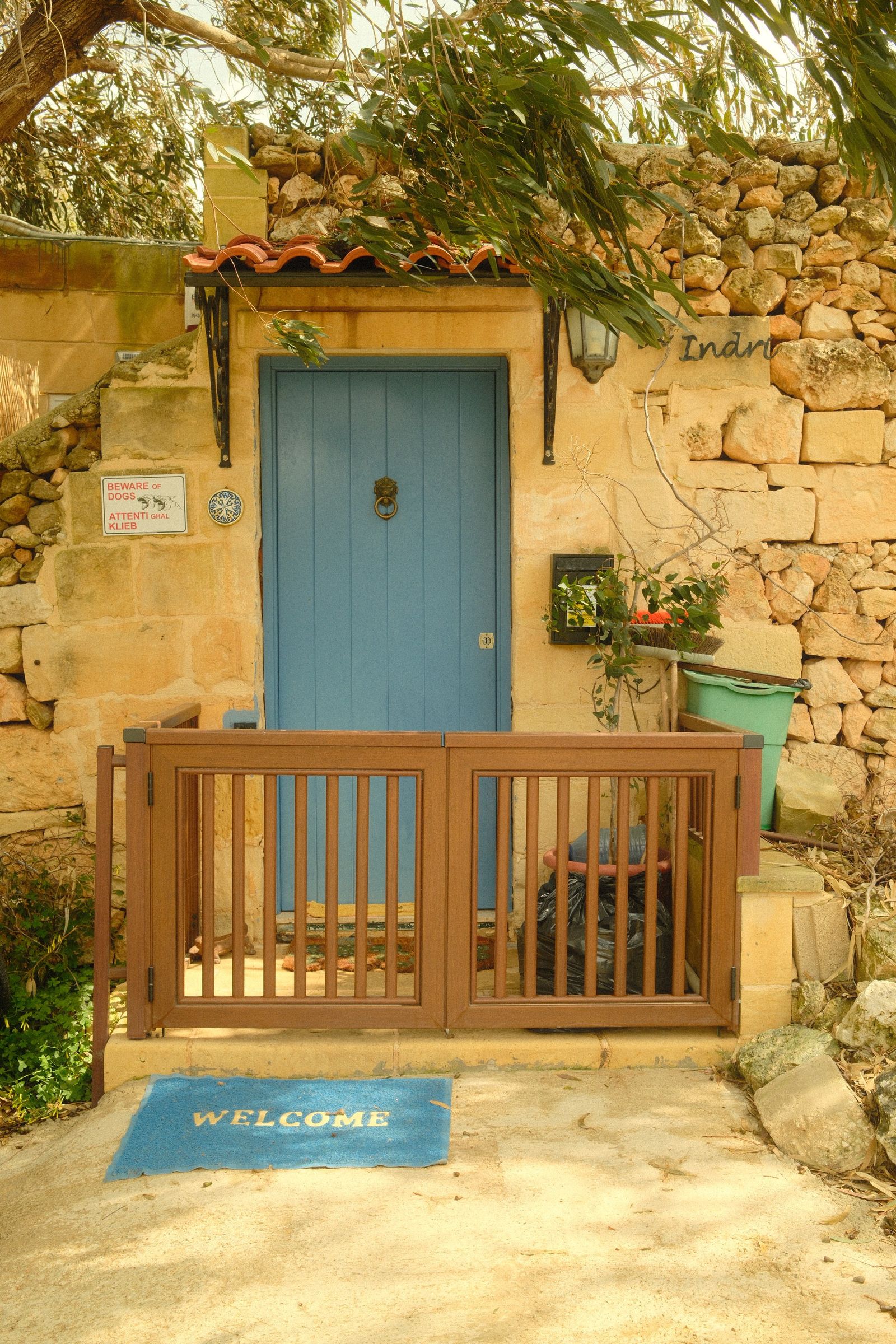
The look: A single wreath, or just clean, well-aligned address numbers and hardware, giving the entrance a focal point at eye level while the floor stays clear. It suits a tiny landing where every square foot of floor counts.
Reuse or inspect first: What you already have: house numbers, door hardware, a wreath. Clean them according to their finish.
First purchase: Often nothing. If you need a way to hang a wreath, choose a hanger made for your type of door, and follow its instructions for that surface. Adhesives and hooks behave differently on glass, painted metal, wood and textured finishes. Do not drill into a door, siding or trim you have not identified, and ask an installer if unsure. Keep house numbers visible from the street, and check any local rules about them.
Full-size test: Hold the wreath in place and open both doors fully. Does it hit the storm-door handle, closer or glass? Does the main door still latch and seal with a hanger over it?
Trade-off: Wind, rain and sun wear decorations down, and every door slam is a test of the hanger.
8. Refresh a sound porch surface when decoration is not the main problem
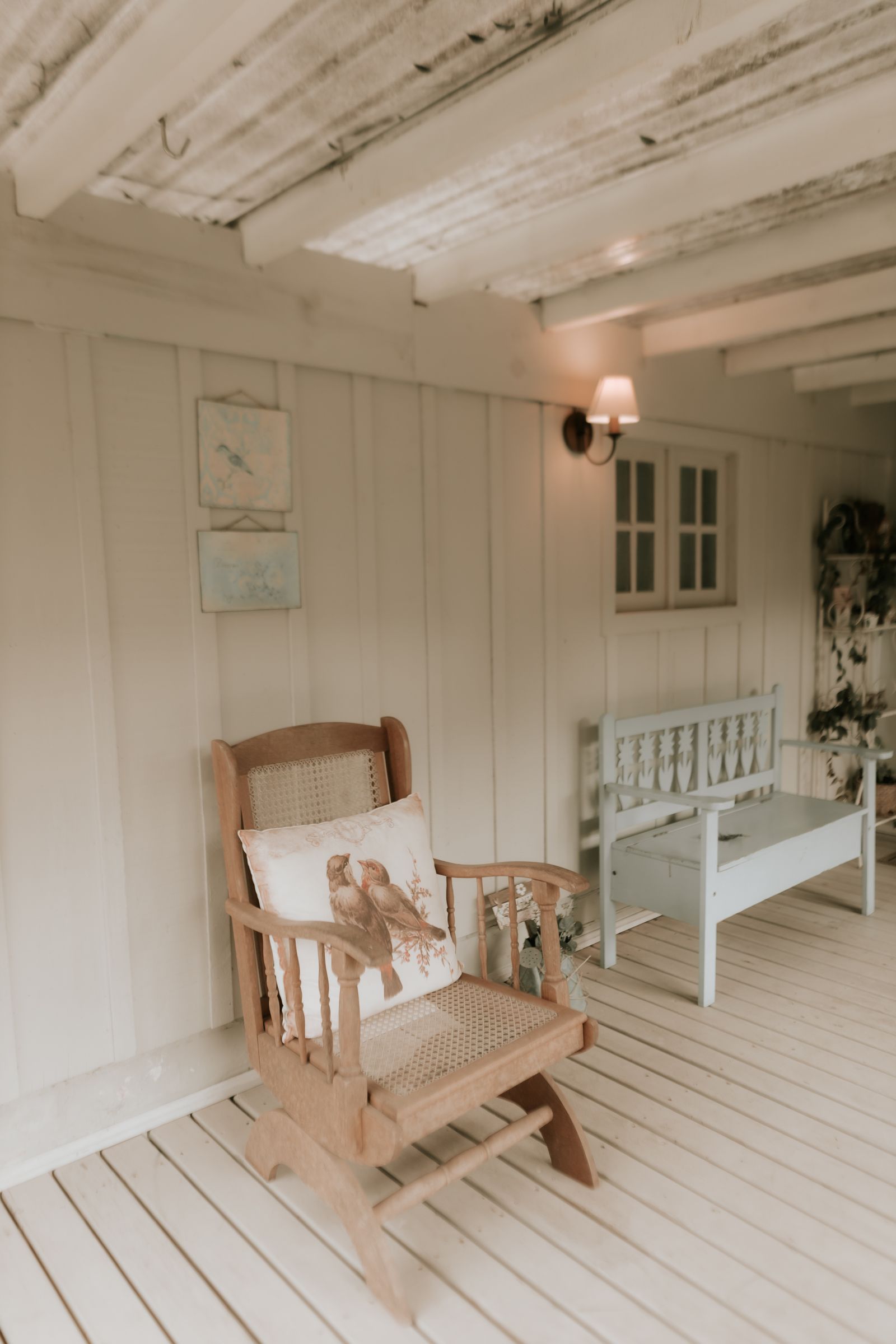
The look: A clean, evenly finished floor that makes worn wood or concrete look cared for, with fewer objects on it. It suits a porch where stains and flaking paint are the main complaint and the floor is structurally sound.
Reuse or inspect first. Ask whether the surface is sound. Look for visible softness, deterioration, movement and cracking, look for standing water after rain, and look for loose boards or crumbling concrete. Paint does not repair rot, movement, failed drainage or damaged steps. Those are repair jobs that fall outside this guide.
Cleaning alone may be enough. If you coat, follow the label of the exact product. BEHR's porch and patio floor paints are sold for wood and concrete and come in different formulas. Their product pages call for surfaces that are clean, sound and dry, ask for new concrete to cure before coating and for etching to a specified texture, require wood prep that depends on the wood's condition, and specify an air and surface temperature range. They are not for garage floors, and BEHR cautions that painted surfaces may become slippery when wet. Drying, recoat and return-to-use times vary by product, temperature and humidity, so read your can instead of trusting a general number. Pre-1978 homes call for the EPA's lead check before any sanding or scraping.
First purchase. This is a planned project. Count cleaner, any prep product the label requires, tape, applicators and the coating itself.
Full-size test. Use the paint calculator with the floor area you actually plan to coat and the coverage printed for your product, which varies with surface texture and porosity. The calculator cannot judge surface condition, compatibility or safety. Also plan how you will use the entrance while the finish sets and where the furniture will wait.
Trade-off. The entrance is partly out of use, and high-traffic spots near the door may need attention again sooner than the rest.
Compare the options
| Main problem | Best first change | Reuse first | Check before spending |
|---|---|---|---|
| No room for chairs | Skip seating; improve the door, mat or one wall detail | Existing mat, wreath, house numbers | Full door and storm-door swing; room to stand clear of the open door |
| A dull entrance | Door color (idea 1) | Existing hardware, trim color as a cue | Door material, paint label, home's age |
| Unsuitable existing furniture | Clean, inspect, then repair, repurpose indoors or retire it | Frames and cushions that pass inspection | Maker's care guidance; stability; whether it is truly made for outdoors |
| A bare corner | One container or one chair, not both | Pots or a chair you own | Light, wind, drainage, how often you will water |
| A mat that catches | Re-size or replace with a thinner mat that fits both doors | The mat you have, repositioned | Gap under both doors; full swing of each |
| A worn-looking surface | Clean first; coat only if sound | The existing floor | Soft spots, standing water, label's surface and temperature limits, lead |
Measurement steps
How to measure
- Sketch the landing, steps, posts and every fixed obstruction.
- Mark the full swing of both the main door and any storm or screen door.
- Mark the path from the steps to the entrance and a clear place to stand with groceries.
- Mock up furniture footprints and test them with an actual seated person and room for knees.
- Check mat clearance, planter drainage and the exposure each material will receive.

Advertisement
Choose for the porch you actually have
A tiny landing. Skip seating. Put your effort into the door, a correctly sized mat and one wall detail. The landing's job is to let you step out, turn and close the door. If you wonder whether it meets code or accessibility requirements, ask your local building department; this guide cannot say.
A long, narrow porch. Put any seat at the far end, away from the door and steps, and keep one continuous clear line along the side you walk. A shallow bench or a single chair works better than a pair. Avoid planters along the walking line.
An outward-opening screen or storm door. Mark the door's full arc and keep chairs, pots and thick mats out of it. Check where the door stops or latches open, because that is where it will actually travel.
Covered, but exposed to wind-driven rain. A roof does not make indoor furniture, fabrics or paper decor suitable. Wind pushes rain sideways, so find the edge that gets wet and keep fabric on the protected side. Wind also dries pots out faster.
An uncovered entrance. Everything is exposed to sun, rain and snow. Check each label for outdoor use, bring cushions inside, make sure containers drain, and remember that coatings have temperature limits on the day you apply them.
A porch used for deliveries and groceries. Keep one drop spot, such as an empty corner or a bench end, that sits outside the door arc. Walk through carrying bags, and set a typical box where it would land. Never stack items on steps.
Spend in the right order
Remove whatever has no useful role. A broken pot or an extra chair is not a decoration.
Clean and assess what is already sound: door, floor, furniture, mat.
Reposition reusable pieces, then test them at full size.
Make one high-impact change that addresses your biggest problem.
Live with it before you add anything else.
It helps to sort every idea into one of three honest categories.
No new purchase: clearing, cleaning, repositioning and reusing.
Reuse plus one item: a mat sized to the doors, a replacement cushion cover, a hanger. Door paint sits between this and the next category, because the paint is one item but the cleaner, tape, applicators and weather window count too.
A planned coating or furniture project: a floor coating, or replacing a seating set. Count prep products, hardware, delivery, storage and upkeep, and never call it cheap while skipping those.
Cheap purchases add up the same way. A mat, two pots, a pair of cushions, a wreath and a lantern are each easy to justify, but together they cover the floor, then need watering, drying, storing and replacing, and they may not fit at all. Buy one thing, live with it, then decide.
Measure and test before buying
Sketch the porch and every fixed feature: steps, posts, rails, windows, meters, hose bibs, the door and its hinge side.
Mark the full swing of the main door and the storm or screen door.
Mark the route from the steps to the entrance.
Mark each furniture and container footprint at full size with cardboard, chalk or tape, using whatever suits your surface.
Test chairs and benches occupied, with someone seated and the chair pulled out, not just pushed against the wall.
Carry a grocery bag through the arrangement, with both doors opening and closing.
Check mats against the real threshold and door movement, including the gap under both doors.
Plan where deliveries can sit without blocking access.
Check water runoff and cleaning access: where pots drain, where rain blows in, and whether you can sweep and wash behind things.
Confirm each product's suitability for your actual exposure, reading the label for outdoor use, temperature and surface limits.
Do not pile storage or planters on the steps.
Before-shopping worksheet
| Record this | Why it matters |
|---|---|
| Porch width, depth and shape (use the square footage calculator if the porch is not a simple rectangle) | Sets the space that is really available; needed if you coat the floor |
| Door and storm-door swing, threshold height, gap under each | Decides mats, chairs, pots and wall details |
| Dimensions of furniture you already own | Lets you test reuse before buying |
| Occupied footprints: person seated, chair pulled out | Shows whether seating really fits |
| Exposure: roof, wind-driven rain, sun hours, winter | Determines what survives |
| Existing materials and the home's age | Governs cleaning, coating labels and the lead check |
| Light at each planter spot over a full day | Plant choice depends on actual light |
| Drainage and where water goes | Prevents stains, rot and slick spots |
| Dry storage for cushions | A cushion with nowhere to go gets wet |
| How much upkeep you will actually do | Watering and cushion care are recurring costs |
Start here
Clear the porch. Open the main door and the storm door through their full swing and mark that arc, then mark the walking route from the steps to the entrance. Look at the space that is left and choose one improvement from this guide that fits inside it. Live with it for a while before adding another.
Project checklist
Before you buy or build
- Main and storm doors move fully
- Occupied seating fits outside the walking route
- Materials suit actual weather exposure
- Mat lies flat and does not catch
- Surface problems resolved before coating
Planning note
Verify before buying or building.
Photographs are visual references, not EstimatorPad projects or verified installations. Confirm the exact product instructions and suitability for your own room before buying; construction, waterproofing and repair details need the appropriate installer.
FAQ
Common questions
01What if my porch is too small for seating?+
Skip it. A clear landing is a feature, and a seat that makes the entrance harder to use is not an upgrade. Spend on the door, a correctly sized mat or a single wall detail.
02What should I buy first on a limited budget?+
Usually nothing. Clear, clean, reposition and test first. If you still need to buy, choose the one item that fixes your biggest problem, such as a mat that clears both doors or color samples for the door, and stop there until you have lived with it.
03Can indoor furniture be used on a covered porch?+
Do not assume so. A roof does not stop humidity, blowing rain, condensation or temperature swings, and the adhesives, foam, fabric and boards in indoor pieces often are not made for them. Look for the maker's statement that the piece is for outdoor use; if it is not stated, treat it as indoor-only.
04Should I layer rugs under the doormat?+
Not automatically. Each layer adds thickness and an edge that can catch a swinging door or lift underfoot, and layers can hold moisture and shift against each other. Try it only if both doors clear it completely and it lies flat, and skip it if either door sweeps over it.
05How do I choose plants for a shady or exposed porch?+
Start with real conditions: hours of direct sun, wind, how much rain reaches the pots, and your coldest weather. Then ask your cooperative extension office or a local nursery, and read plant tags. Extension guidance also reminds us that containers need more watering attention than ground plantings, so match the plants to your willingness to water.
06Is painting the floor the right first step?+
Only if the floor is sound and the problem is appearance. If boards are soft, move underfoot, water pools, or the steps are damaged, repair comes first. Cleaning may be enough. If you do coat, read the label for that exact product's surface prep, temperature range and return-to-use guidance, and check the EPA's lead guidance first if your home predates 1978.